Krypton, and the launch
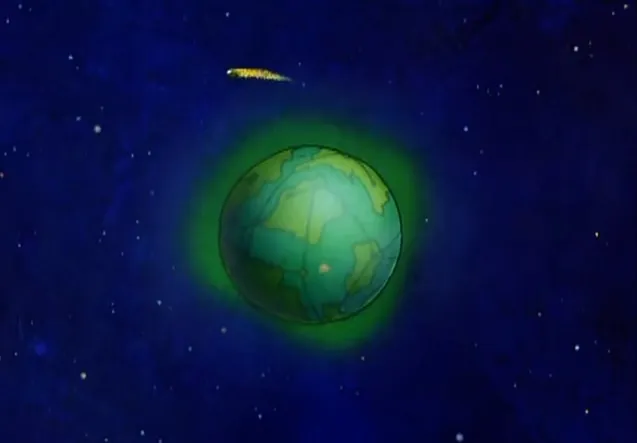
Krypton orbited a red sun and was, by every account in the comics, further ahead of Earth than Earth was ahead of its own past. Jor-El, one of its leading scientists, worked out that the planet's core had destabilised and that the world had very little time left. The ruling council heard the evidence and rejected it, which left him with no way to save a population and just enough time to save one person.
He and his wife Lara put their infant son into an experimental rocket and aimed it at Earth. Krypton broke apart minutes later. The consequence is the quiet problem the character carries in every version: he is the last of his kind, he remembers none of it, and the culture he lost reaches him only as a recording left behind by a father he never met. Later stories gave that loss an address in the Fortress of Solitude, an Arctic vault holding Kryptonian archives and technology.
Smallville, and the Kents
The rocket comes down near Smallville, Kansas. Jonathan and Martha Kent, a childless farming couple, find the child and raise him as Clark. As the abilities surface during his childhood they teach him to keep them quiet and, more importantly, to be deliberate about using them. Almost every retelling makes the same point with the same economy: the powers came from Krypton and the judgement came from Kansas.
Those years were eventually spun off into their own franchise. From 1945 he appeared as Superboy in stories about his teenage career, and that material produced the Legion of Super-Heroes, a team of thirty-first century heroes who formed because his example had survived a thousand years.
Metropolis, and the newsroom
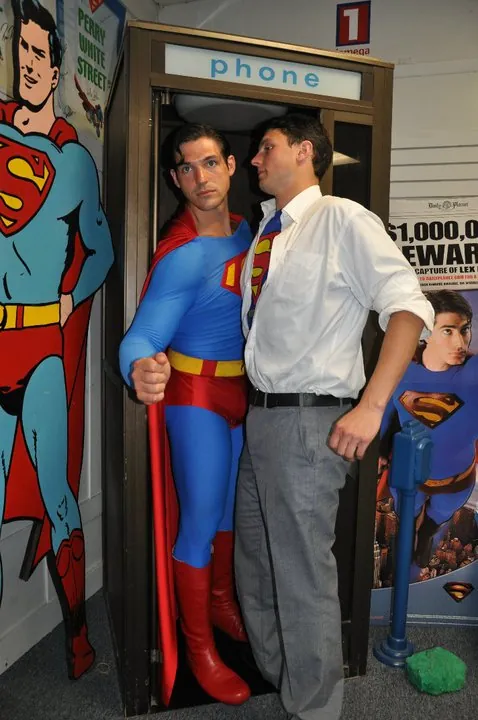
As an adult he moves to Metropolis and is hired as a reporter at the Daily Planet. The job is not decoration. A reporter has a professional reason to arrive where something is going wrong, and the newsroom supplies the supporting cast: Lois Lane, the paper's best investigative journalist; Jimmy Olsen, the young photographer; and Perry White, the editor who is permanently unimpressed.
Lois carries most of the weight. She was in the first story in 1938, she was written from the beginning as the better reporter of the two, and the triangle between Lois, Clark and Superman ran for decades before the comics finally married the characters in 1996.
What he can do, and when he could not
The abilities come from the way Kryptonian physiology processes radiation from a yellow star. In 1938 the list was short and almost athletic: lift enormous weights, outrun a train, shrug off anything short of a bursting artillery shell, and leap an eighth of a mile. He could not fly. Flight was introduced by the radio serial and the Fleischer cartoons, partly because animating the same leap repeatedly looked cheap, and the comics adopted it afterwards.
By the late 1950s he had accumulated heat vision, x-ray vision, freezing breath, enhanced hearing and effective invulnerability, and the writers had run out of credible threats. Every major relaunch since has opened by cutting the power set back down, which is why his limits differ noticeably from one era to the next.
The danger in a Superman story is almost never physical. The question the good ones ask is what a person with that much power decides not to do. A theme common to every publishing age
The two things that work on him
Kryptonite and magic. Kryptonite is irradiated debris from his destroyed home world; it was invented for the radio programme in 1943 and reached the comics in 1949, and the green variety weakens and can eventually kill him. Magic simply ignores his invulnerability. A third limit is environmental rather than dramatic: his energy comes from a yellow sun, so under a red sun like Krypton's he is reduced to ordinary human strength.
The people on both sides
His closest allies are his cousin Kara Zor-El, introduced as Supergirl in 1959, and Krypto the Superdog. Outside Metropolis he is a founding member of the Justice League, and the friction between his optimism and Batman's suspicion has powered crossover stories for fifty years.
Lex Luthor is the permanent opposition, and his objection is an argument rather than a grudge: he holds that humanity will never solve its own problems while an alien is available to solve them first. The other recurring threats are Brainiac, an artificial intelligence that collects and shrinks cities; General Zod, a Kryptonian officer exiled before the planet died; Bizarro, a failed duplicate; and Doomsday, the creature that killed him in 1992.